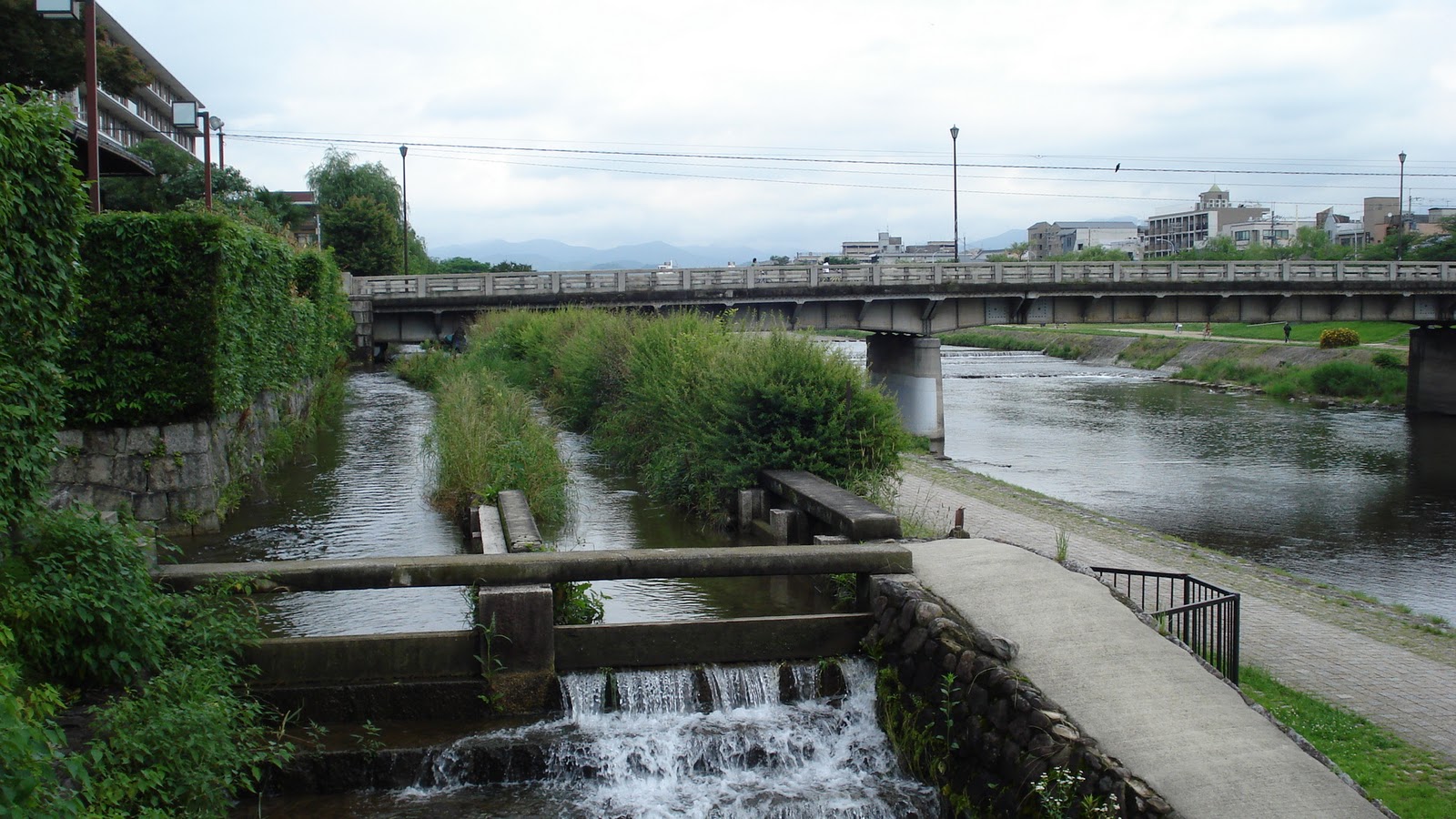
Friday, May 31, 2013

Goats, bunnies and ADVENTURE!

As I told the clerk at the store tonight, "today was a pretty great day."  I started put the day by getting up early to get Cait off to her field trip to the coast. I used the extra time to make home fries for the older two kids. There was so much happiness. Then, before heading out for the day, I packed up all the Salmon Watch gear that's been living in my garage and shed for far too long.

Shortly after arriving at work I submitted the grant application I've been working on for the last week. We're requesting just under $5,000 for things like a new dry suit, waders/boots, pruners and loppers but the thing I'm most excited about is the possibility of a new waterproof GPS capable digital camera.

After submitting the grant, my co-worker J. and contractor M. loaded up all the tarps and headed out to the work site.  While J. and M. made a few stops on their way, so I took a few moments to meet the demonstration farm's newest residents.


They have about a dozen baby billy goats which will be used to remove invasive vegetation. This little guy was soooo friendly. He was definitely ready for his close-up.

Then I checked in on the bunnies. Poor sad earless bunnies. They were their mamas first little, and she cleaned their ears right off shortly after birth. They kind of look like guinea pigs. No cute pictures of them though, their hutch is too dark. After fun with the farm animals, J. and M. arrived and we got to work.

 J. decided to take the ATV down to the work site, and rode off down the hill. I drove his truck down to the lower stream crossing and found that M. had already driven across and neither he nor the ATV were in sight, so I drove the truck across. I went for a short walk to find the boys and met up with them after 10-15 minutes. I was greeted by J. calling out, "you're braver than I am!" Apparently he had never driven his truck across to the other side of the channel, as I had just done. Whoops!

 We spent the next few hours getting stuff set-up for Monday's "Riparian Restoration Olympics" with all of the middle school teams from Springfield. (more on that soon!) Having the truck on the other side allowed us to empty the tarps right where we needed them without having to haul them piece by piece across the channel.

After we were done, we decided to cross the channel at the upper crossing, where we thought it would be an easier go. He drove through the 6' tall reed canary-grass, and I followed in his truck. He had to stand up on the ATV to be able to see where the "road" went. At one point I drove over a willow, not kidding.

As we approached the upper crossing, J. stopped the ATV and walked back to let me know that there was a bit of a drop into the channel, indicating that it was about 6" or so. I watched as he hit the drop and proceeded through the channel. Then I slowly approached the drop. Unfortunately, one side of the drop was steeper than the other and as I went over it the truck shifted sideways and one of the wheels was up off the ground. Yikes.

So I did what any girl would do, I continued forward, allowing the momentum to carry the truck over the drop, and then let out the clutch a bit to gain momentum to make it up the other side of the channel. At two points, I had three wheels in contact with the ground. It was a bit scary.

When I made it up the other side of the channel, and stopped behind J., he came around to the passenger door and said, "That wasn't too bad." I replied, enthusiastically, "THAT WAS AWESOME." And it was.

We finished up putting away gear, and I apologized again for driving to the other side. It could have ended badly, but lucky for me, it actually worked out well. All in all, a pretty good day.

Tuesday, May 28, 2013

Walking in the river

I have a pair of waders.

I have had this set of chest waders since October. As part of my job, I work with high school students surveying riparian and in-stream habitat.
 
These students are AH-MAZ-ING. They have to apply to participate in the program, and only a few new students are added to each team. They learn the protocol, and go out to do this work in ALL weather. It has snowed and rained on us. One time we had to send one student in the lead to break up the ice on the side channel we were surveying before the rest of the team could go through. Ice breaking students?! They had so much fun that day, even though we were all super cold.

We follow the Aquatic Inventories Project: Methods for Stream Habitat Surveys developed by Oregon State and ODFW. In simple terms, it means that we teach the students to assess the quality/quantity of the in-stream and riparian habitat based on an established protocol resulting in usable data for the council.

It also means that I get to walk in the river, climb up, around and over log structures, and really do my best not to fall on my butt in front of kids who are 22+ years younger than me. The first few times I went out with them, I felt like I was a million years old. I was so slow and clumsy. I'm a lot better now. Although, chasing after 15-18 year old students through the woods, streams, backwaters on a regular basis certainly hasn't hurt my physical abilities. I believe that it is more because I trust my own body to do the things I need it to do - stand against fast flowing water, stumble instead of falling, walk along a log covered with slick moss, jumping down onto uneven ground without hurting myself.

The school year is coming to an end, and although I'll have 2-3 more trips out with these kids this summer, I'm already looking forward to the next school year.


Wednesday, May 8, 2013

Wordless Wednesday

Another hard day at "the office" means getting kids into waders, and having them experience nature. 


Tuesday, May 7, 2013

One Year Past or A Year in Pictures

Yep, that's my guy. He's awesome. 

So much has happened in the last year, and I've obviously been a huge slacker too busy to spend a lot of time posting.  I've been incredibly busy living life.

In my last post, I talked a bit about my internship with the Friends of Buford Park at the Native Plant Nursery. I completed my internship and was asked if I would continue to volunteer, leading the new interns in nursery operations so that the Stewardship Coordinator could go and do other work in the park. So, I continued to volunteer through the first week of August, harvesting and cleaning seed in the nursery.

The garden was so overgrown you couldn't see the beds.
YAY Graduation!! Crystal and I were both so happy to be done.
In June, Stephen and I got married at a historic hazelnut orchard called Dorris Ranch. The arching habit of the hazelnut trees provided a cathedral like setting for our ceremony, and then our reception was outdoors next to the barn. It was a gorgeous day, and we were so happy to be able to share the beautiful day with our friends and family.

Two days later, I graduated from the University of Oregon with my Bachelor of Landscape Architecture degree. It was an amazing few days, and it was also absolutely exhausting. But, I'm so glad that we were surrounded by people that love and support us. 

Wading in the McKenzie, chasing after HS students.
 In July, we moved into a new house, further from campus. Great house, with a great garden space that needed a LOT of work. YAY! It was a giant weed pit, but we quickly went to work, clearing beds, removing weeds, adding to and amending the soil.

Another "hard" day at the office.
I continued to work at the UO part-time, and volunteer at the nursery. I was applying for pretty much any job that fit the bill. That bill being that it needed to pay, be located in Eugene and use my degree. I applied, interviewed and accepted an additional part-time position with the McKenzie Watershed Council, as their Salmon Watch and Education Coordinator. If you don't know what a watershed council is, this blog post provides a great overview.At first, I was hesitant to take the job because I had just spent 4 grueling years and thousands of dollars on a degree in landscape architecture. Dang it... I wanted to use my degree. But, I also needed a job. After a bit of soul searching, I decided that this position fit my current requirements. It provided experience in a related field, got me in contact with people in my field, paid real money instead of just volunteer experience, and had the potential to become full-time later on.

A job with views like this is just intolerably hard.
My first trip out with students was students from Thurston High School. We all put on waders, and surveyed a side channel of the McKenzie River, recording usable data in areas that wood placement projects had occurred.  Next, I tackled Salmon Watch, which is a story for another time.

Over time, my job has morphed into restoration design, planning and implementation as well as education.  So, the big fear that I had about not using my degree, well, it ended up being needless worrying on my part. I love the work I do! I get to spend time designing in the office, implementing projects in the field, and teaching kids about the importance of healthy of our watersheds (Hello riparian zone!) while working side-by-side them in the field. I keep finding myself outside, in beautiful landscapes thinking, "Can you believe they PAY me to do this?" I have so much fun with the students, working, teaching, even just talking with them. AND, I get to "scratch" my design itch.

I'm still working part-time at the UO as well as working part-time for the watershed council, but we're busily applying for my grant funding to make my position full-time, with benefits. I'm seriously hoping that works out. I love the work, I love the people I work with and I want this job to be what I do.

The good news of all of this, is that I'll likely be able to update more regularly with more about my current adventure, and probably less about my personal life.

Tuesday, April 3, 2012

First day of my first internship


I started my internship with the Friends of Buford Park/Mt. Pisgah here in Eugene today. I am officially a Habitat Restoration Intern at an amazing park located about 15 minutes away (by car) from my home. I have previously visited this park for field trips with various classes, as well as for the Mushroom Festival that is held at the Arboretum. Buford Park occupies 2,300 acres of land situated between the Middle Fork and Coastal Forks for the Willamette River. It contains riparian forests, dense fir forests and some absolutely AMAZING oak savannas and prairies.
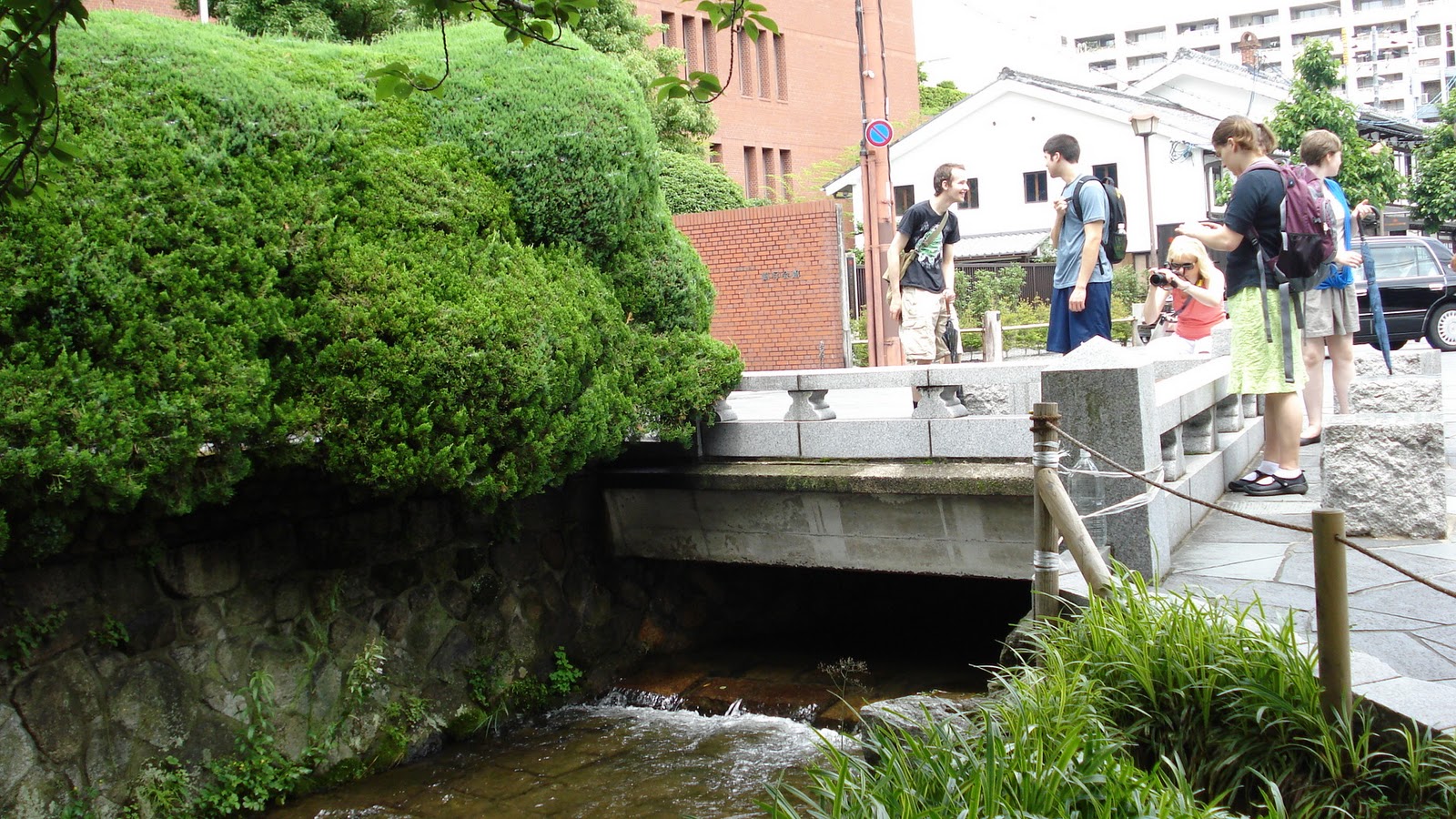

I'm so excited about getting my hands dirty again!  I'll be spending 2 days a week for the next 10 weeks helping in the native plant nursery learning (and best of all, DOING) seasonal propagation and maintenance operations including planting, irrigation, weeding, harvesting, sales, and record keeping.  I'll also have the opportunity to learn to identifying characteristics for dozens of native plants in different stages of development. I'm particularly interested in the planning that goes into this sort of restoration and nursery operation and plan to ask about it after I get enough info about the basics of my tasks.

It was raining this morning when I arrived. There were about half a dozen other students there and so I began introducing myself around to everyone. In addition to the students, I met Jessica, the volunteer coordinator, and Hal, the man who makes all the magic happen.

Jessica and Hal gave us a brief overview of the mission and operations of the Friends of Buford Park & Mt. Pisgah. Most importantly, they explained that while Lane County owns the park, that the Friends complete most of the habit restoration and maintenance for the property. Further, I learned that the Mt. Pisgah Arboretum only holds a lease on a small parcel of the land from the county.

We took a tour of the greenhouse and talked about the seed starting operations and then moved out into the field/lot areas of the nursery. We talked about the non-native invasive plants that are starting to release seed and what was most important to remove from the gardens. Then, we got to work.

We weeded a large plant bed this morning that was FULL of weeds (plants that didn't belong there). It was supposed to be a bed of Grindelia integrifolia, Willamette Valley Gumweed. But it was full of just about everything else instead. There were six of us weeding for more than an hour and we only finished up about half of it! I'm looking forward to seeing a bed full of these: 


After that, we split up into different tasks. I helped with dividing large pots of Juncus petans, Common Spreading Rush. We planted small sprigs of the divided plant into one gallon pots and then moved all of them to the shade lot area for rushes.

Before I knew it, I was dirty and time was up. This morning was a rainy start to what will hopefully be a fantastic internship.

I'm looking forward to being out there on days like this:


Wednesday, March 28, 2012

Losing an amazing mentor and landscape architect

It's come to pass that my mentor (a landscape architect), my peer and friend is dying from cancer. It just had to be breast cancer. Interductal carcinoma, diagnosed too late.

She is the parent to a 14 year old girl who excels at school, has a fierceness about her that is ALL her mother and a tenderness of heart that is unbelievable for someone dealt such a bum hand. She is the wife to an Englishman who's heart is bigger than his body. She is my friend, my mentor and supporter. She is/was such an inspiration and light in this world.

It hurts so much and makes me incredibly sad. If you want to read about it, go here. If you want to help... tell me.

I've been working my drawing muscles

My hands hurt. No, really. My right hand and wrist hurt (and I love it!)

I completed all of my required courses last term and am simply taking a drawing workshop and a class on wetland design this term. The drawing workshop is an intensive week-long course. THIS week. I've spent the three days, 8-9 hours per day sketching. Woah! My hand hurts!

During the last two terms, my drawing work was almost exclusively digital and I wanted to get a bit of a refresher. Some of the in-class drawings/sketches have come out so well that I'm going to add them to my portfolio as soon as I get them back. Yay for portfolio addition.

Look for awesome sketches in the next few days.

Tuesday, March 20, 2012

The final final final

Last Friday afternoon, I presented my final studio presentation for my comprehensive project. My family and friends attended my presentation to the panel of reviewers. It went surprisingly well and except for the fact that I was so nervous and anxious that my mouth dried out and I could barely form words, I'd call it a success. So, let me tell you about the project that has totally consumed my life for the last year.


"The talk"
I started off my talk by discussing the history of the site. Ecologically, the site is a second growth redwood forest with steep topography and suffers from seasonal flooding in the winter and dryness in the summer. Historically, it was an old growth forest that was harvested for timber, burned over for conversion to farm land and then identified as sub-marginal farm land prior to its development as a Recreation Demonstration Area (RDA). Built by the WPA and CCC as part of the new deal, it provided a low cost way for families and groups to experience nature. This is a picture of one of the community buildings during construction:


Next, I talked about how the site has fared since its construction. Largely unchanged since construction, it is a unique example of CCC/WPA construction. As one of only two RDAs constructed west of the Rockies it is historically signficance. Due to its high level of historic integrity it was recommended and approved for designation as a National Historical Landmark.

What you really need to know is that today, the park is owned by California State Parks and managed by a non-profit organization founded by campers. The park contains three distinct camps within it. 

Ok, here's where I got all "mission statement and goals" blah blah blah...
My project sought to provide a plan for the park to be able to successfully navigate the next 100 years. I even had a mission statement. Yes, a mission statement, supporting goals, objective and strategies. Basically my overarching idea was to plan for the current and future needs of the park created by changing populations, values and landscapes while still respecting its historic and ecological characteristics.

Basically, I created a set of interventions that were applied at a specified scale over the 720 acre park. Some of these scales, were applied at the Park-wide scale, some at all of the camps and then others were only applied in specific camps.  My goals included the following areas: Forest Management, Circulation, Accessibility, Wayfinding and Interpretive Design. 

I know, I know, you're sitting there thinking, "why are you still talking instead of showing me pretty pictures?" I think it's because I've spent so much of the last several months trying to organize my project into a 20 minute spoken explanation and it feels like all I can do now... so instead of my talking more and more, here are some cool perspectives, plans and sections for you to make your eyes and mind happy with. All of them were digitally produced and rendered using a combination of AutoCAD, Illustrator, Photoshop and SketchUp.

The plans: 

 Camp 1


Camp 2:


Camp 3: 


Section perspective of Camp 3 (sorry that the plan view above doesn't have a section cut line... I did that after producing the drawings):

Dining hall                            New pedestrian bridge over directed stream                  New nature center

Perspective view of proposed Nature Center in Camp 3:


I've been a busy girl. Here's what the final poster ended up looking like. It was so, so, so pretty. I'm rather proud of it actually (it's 11' long, so I had to shrink it dramatically to be able to post it here):


Wednesday, March 7, 2012

How many rendered versions of a plan can I possibly have?

The saga continues. I've been working on a rendering style for my the plan view for the camps. I started with Camp 1. It's difficult because the entire park is completely covered by a dense canopy of second growth redwoods. I mean, in a real plan view you wouldn't see ANYTHING on the ground plane. So I've been working to develop a rendering that both shows that there's a dense canopy throughout, but also shows what's happening on the ground plane.

Here's my first attempt:
This first attempt is ugly, ugly and ugly. It doesn't really show the new plan well and it looks like something you might see on a fail blog. So I kept at it... tried multiple things and it just sucked. So I took the aerial into Illustrator, drew a tree shape using the pencil tool, used a clipping mask to clip a tree shape from the aerial photo. I then brought that into Photoshop and copied and pasted different sized/rotated versions of that about a billion times to get to this point of coverage. I also used color adjustment layers after bringing in the "vector smart object" line work for the plan from Illustrator. So here's the second attempt: 
I showed it to a friend who is not in Landscape Architecture and she said that the ground plane within the camp looked like it was scrub/shrub. Having that insight was helpful.. because I didn't see it that way. So I took her comments and have not come to this point (it's actually version 6 or 7): 
I'm a lot happier with it now, but I think I need to add some texture or detail to the water to give it some depth. Now, on to camps 2 and 3.

Monday, March 5, 2012

Working, working working

I've been busily working on my comprehensive project. I know... I know, I've been so busy working on my comp project that I have posted anything about it here. Here's the summary of the project: 

"My project is both a historic preservation and comprehensive master plan. The project is called: Evolve and Preserve: Planning our future history in the Mendocino Woodlands. The project site is the Mendocino Woodlands State Park, a 720-acre family and group camp in Mendocino, California.

It was built in the 1930s by the Civilian Conservation Corps as a a recreation demonstration area and is a National Historic Landmark.

Located within a second-growth redwood forest, the Woodland’s structures are suffering from deterioration due to the evolution of the forest over the last 75 years. The closed canopy forest has reduced sunlight and air circulation, and seasonal erosion has damaged structures, roads and paths.

A cultural landscape inventory was completed in the spring of this year and the cultural landscape report is near completion.

My goal is to work with the various stakeholders to develop a comprehensive master plan that will address preservation needs for the landscape and the structures as well as plan for future needs that will be effected by changing populations, climate and values."

So yeah, it's big, it's complex and it's amazing. It's in the California redwoods and all the buildings and features were built by the CCC/WPA crews. But, now, almost 80 years later, it needs some love to keep it awesome for the next 80 years. I've been spending nearly all my time on it. This past weekend I worked on a sketchup/photoshop perspective for making one of the cabins accessible:

Before:
After: 


Of course, I'm not done with this yet... I need to add in people to the image.  While I was looking for an image of a happy active kid in a wheelchair to Photoshop into this image, I came across this and just simply had to share: Ramp fail and this ramp fail.

Here's another perspective I worked on the other day involves a new pedestrian bridge across a river that runs through one of the camps. 
Before:
 After:

I have 11 more days til my final presentation. I expect to be posting items as I complete them, so I might just actually update this poorly neglected blog more frequently.

Friday, September 23, 2011

Summer in Kyoto - Part 1

I promised some photos from my summer abroad in Japan. The course was structured such that the first two weeks we were there, we primarily visited and watercolored gardens. We learned about Japanese garden design through direct observation and studies in watercolor. It's really interesting to me, how when you paint a place you learn so much more about it's structure and layers, not just it's colors, but it's textures and weight as well.


Entrance walk to Tenryu-ji temple
 The first garden that we visited was Tenryu-ji, we visited the gardens and then settled down to paint.  After about 20-30 minutes a monk came over and asked us to leave. Whoops... officially kicked out of my first zen buddhist temple. Is there some sort of achievement or level up that goes along with that?
Tenryu-ji temple entrance
 This is the garden we were painting when the quiet monk came over and asked us to leave, because we were a distraction to their visitors.

Tenryuji Gardens


So we all packed up our paints and went on a tour of the gardens instead. It was sprinkling a bit that day and the water droplets were clinging to all of the hydrangea blossoms. It was very beautiful.

Hydrangea with rain drops at Tenryu-ji

 Then we walked behind the temple gardens into the bamboo forest. It was absolutely incredible. Also, completely full of mosquitoes who wanted some exotic A+ American blood.


Bamboo forest behind Tenryu-ji
The cloudy skies and light rain created the effect of a fog or mist through bamboo. Every now and then you'd see a Camphor tree trying to compete with the bamboo. 

 The forest is maintained by the monks -- as this bamboo only had a life span of about 20-30 years. Dead and felled bamboo is removed, allowing for new growth. 

Bamboo forest behind Tenryu-ji

The experience of walking through this forest is very surreal, almost otherworldly when you realize that the bamboo is really just overgrown grass.

Tuesday, September 13, 2011

Oh hello blog, sorry I was busy.

Oh wait!! Who's been a total and complete slacker about posting here? Oh, yeah, that would be me.

I have good excuses though, really!! Spring term was super busy and I didn't really have much to post until after the end of the term. But then I only had 10 days between the end of the term and leaving for the Kyoto study abroad program. I've spent two months in Japan which was fantastic.

I'll share some photos and paintings from my travels soon.

In the meantime, enjoy a watercolor plan view painting that I did of Jiko-in garden in Nara, Japan prior to going there. I may do a new one soon that is more accurate. YAY for accuracy!

Wednesday, February 2, 2011

Another one done

The mid-term review at SAIF went well today. We received some good feedback--some of it rather insightful and some of it to be taken with a grain a salt. So yeah, just like any review, right?

Here are some of the sexeh images I keep promising from midterm:


Illustrative Schematic Plan

Yes, it looks remarkably similar to the last version. But there are several refinements: "plaza" stairs have been reshaped, a new connection from the building at the north to the garden, reshaping of the paths and sculpture area, etc. Also, its hella darker. I look at it and think it's too dark. But, (like a good sailor) I was following orders.

"Section 4" aka Zen Rock Garden:
The sections don't show how fantastically peaceful and secluded this space actually could be. I will simply excuse by the fact that I was required to show sections of the above and not a perspective... but I might just go ahead and do a quickie just to show how awesome it is. This design was well received by reviewers. It provides a very big bang for very little input financially. It requires some reinforced concrete formwork, fill and planting.. plus a bit of planting reorganization, but it provides an optimal use of a currently wasted space.

"Section 5" aka Outdoor Cafe

I'm seriously interested in the materiality desired on this site. Or rather, really curious. Here's why: I designed a core-ten steel and glass covered pergola. During my review, I was asked about construction costs and maintenance costs regarding this structure -- in way that was somewhat questioning the value of the materiality. But, on the poster requesting user/employee input on the type of structure desired.. this was the type of structure materiality with the most interest... so yeah. I find it interesting. I keep thinking that they (the group within the company making decisions) need to have an honest discussion with their employees about what they want vs. what they can/should provide. I just keep thinking there's something there, intrinsically perhaps culturally, that they're missing, that would help with the resolution of the design program.

I felt like the criticism that we hadn't fully integrated as team was spot on. (Dear Quad Squad members... should you read this, know that I mean it for myself as much as I do for you) I feel like we haven't all sought out each other's advice and comments on our designs. Its frustrating because I feel like the reason for this is more a result of the studio structure than part of our group structure... we've been talking and getting each other's input. However, we've been so pressured and pushed by arbitrary deadlines that we have had little time to truly collaborate.. and that very idea of collaboration hasn't been emphasized. Also, there have been several key design ideas/materiality decisions that have been made without consensus (because of the above) and that bothers me. So yeah... I guess the bottom line is that I'd like enough time to be able to actually talk as a group without having HUGE massive deadlines looming preventing effective discussion.

In the end, it was another review. Another check on the list of reviews/finals, etc.

Next up, construction details sometime around Saturday/Sunday (because really, who needs a weekend off other than maybe my kids and me)